A chronicle entry for the Secret Annex
C.A.
In memory of Brother Wyn.
Anno Domini 1282
There is a builder near Cilmeri who is known as Sais, though he is no more English than Father Iorwerth, and has objected to the comparison on several occasions. Those responsible for the name maintain that he has the look of an Englishman. When he pressed a neighbour to explain what she meant, the woman couldn’t give him a straight answer. Only that she knew a Sais when she saw one.
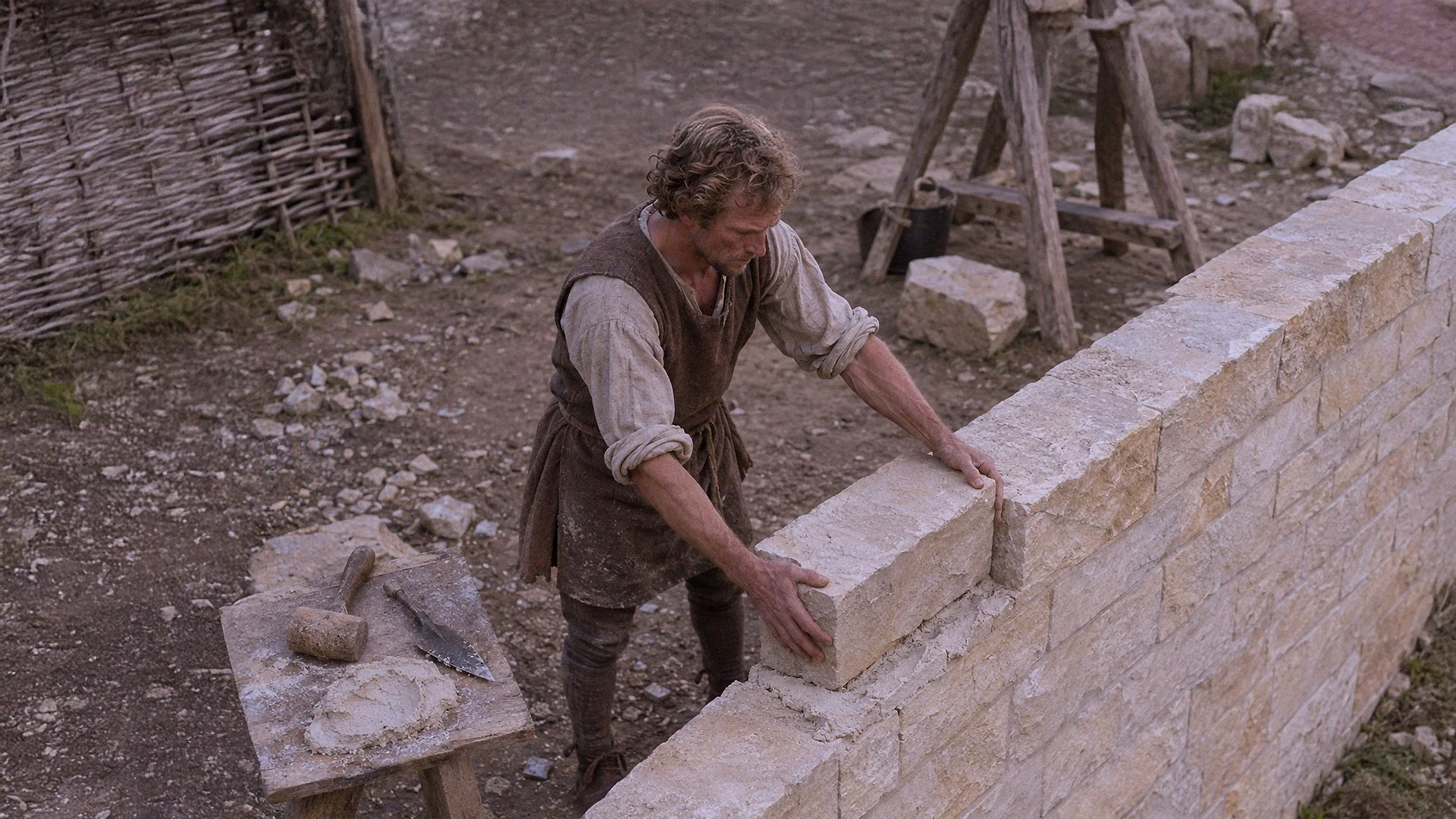
Sais the builder. Pwllgwilym.
Sais built the house at Pwllgwilym over three patchy Welsh summers. Ever the perfect host, he receives visitors with considerable enthusiasm, offering Gwesty to anyone who has not yet heard about the saint. His workmanship is well regarded throughout the district, though it is advisable to agree upon the work required before asking about the name and history of his home. Several men have gone there to discuss a wall and returned knowing a great deal about the Roman occupation.
According to Sais, Gwilym, after whom the place was named, was the son of Arianwen. Her people, the legendary Bathiads, lived at Caer y Bathau when the Romans first came into these lands. They guarded a spring in Epynt Meadow, where the monastery at Caermynach now stands, and believed its waters flowed from the springs of Annwn. Fearing what would become of the spring if their home fell, they began carrying its water over the Mynydd Epynt hills to a pool in the Borderlands near Cilmeri. The journey was made one vessel at a time, so that their labour might pass unnoticed, and eight years went by before the pool was filled.
This part of the account has caused considerable argument among those who have employed the services of Sais. A man who once waited most of a summer for a boundary wall has suggested that the eight years may tell us more about the builder than the saint. Sais has replied that the people of Caer y Bathau were obliged to conceal their work from the Romans, whereas he had been waiting for payment. Three seasons, by his reckoning.
The story becomes more troublesome when Gwilym, the last survivor of his people, is said to have destroyed the pool several centuries later. Having given himself to Christ, he came to believe that the water preserved the body at the expense of the soul. In a vision, he understood that to drink from it, or use it to heal a mortal wound, was to refuse the death God had appointed.
Father Iorwerth approves of this conclusion, though he has expressed doubts about the length of time Gwilym required to reach it. Others have asked how a man could live for several centuries, despite having listened quite patiently to the account of the water that kept him alive.
There are many in Cilmeri who believe Sais invented the saint to give his house a more distinguished history. But to dismiss such stories without careful consideration is, to me, a sin of its own. It is true that Pwllgwilym bore its name long before he built there, and I have seen this account with my own eyes. Brother Wyn set down the chronicle of Gwilym and the Bathiads more than two hundred and fifty years ago, and in this case he was not the original scribe.
Final Entry
I am told that one of the builder’s disgruntled neighbours recently asked him to reopen the old pool. The farmer explained that he needed somewhere to water his cattle, and that the precise location of Gwilym’s pool would do the job.
Sais agreed to inspect the ground, whereupon his neighbour followed him along the hedge. “My ears have been causing me trouble,” the farmer said. “I was hoping you could help.”
When the builder explained that the water’s healing properties had long since vanished into the ground, his neighbour shook his head, apologising for having misspoken. “My wife is the cause of the earache,” he said. “I was wondering if she could accidentally fall into the pool, if that wasn’t too much trouble?”