
Chronicles of
Brother Wyn
Records of the Eastern Veil & The Company of the Paths
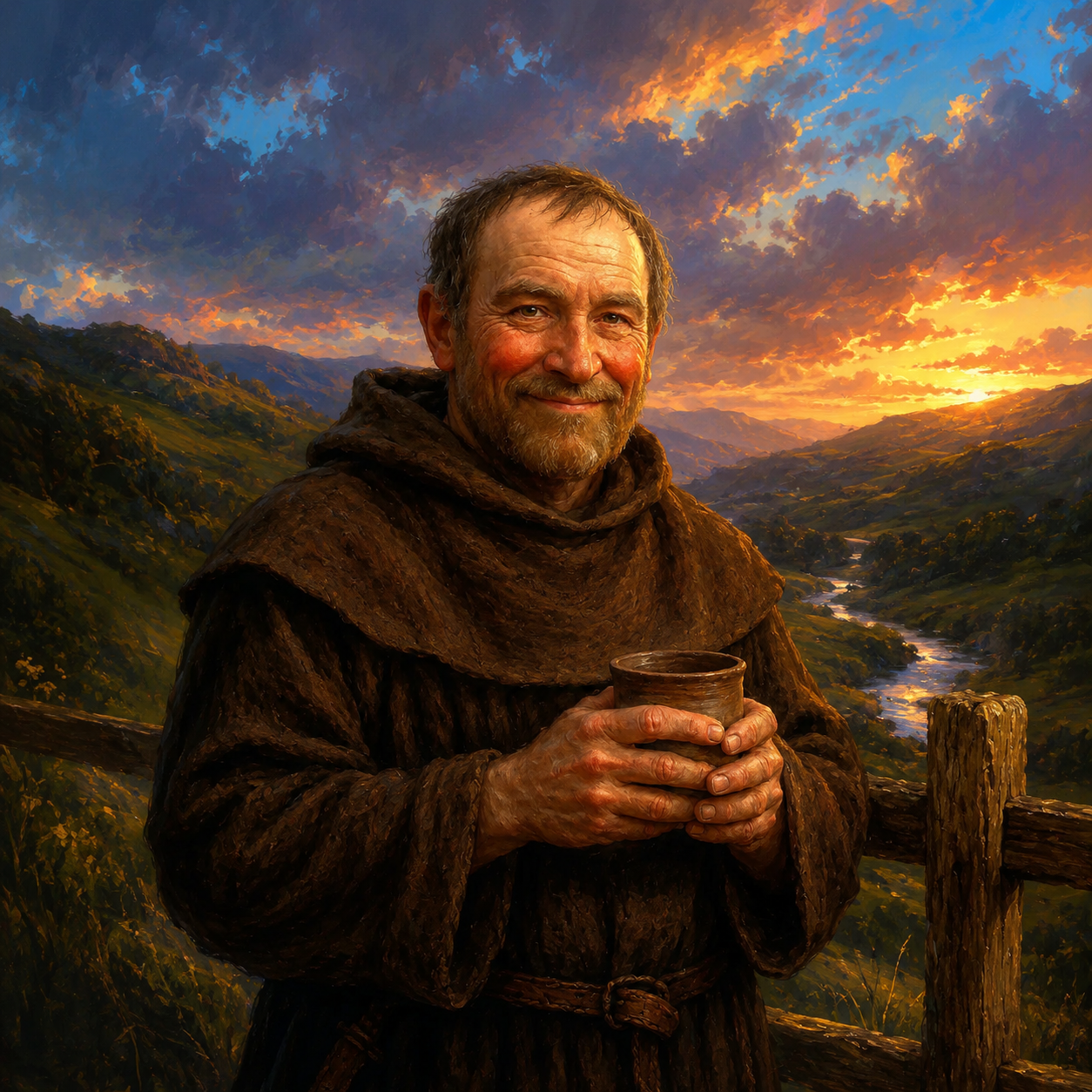
Born in Buallt, Brother Wyn of Caermynach grew from a smith's child into the chronicler who preserved the hidden shape of early Wales. He walked the ridge paths of Epynt with a careful ear, gathering the history of drovers and wandering elders.
But his most dangerous work arrived in the dead of winter, delivered by foreign traders bearing the mark of the Cwmni'r Llwybrau (The Company of the Paths).
These are the Secret Annexes. Written under penalty of heresy, they contain intelligence gathered from beyond the Eastern Veil by an ancient network of merchant spies. These surviving leaves detail a six thousand year cold war, and the watchful eyes that ensured the horrors of Shinar would never return to Welsh shores.
Cwmni'r Llwybrau
Cwmni'r Llwybrau operated as a merchant guild for six thousand years. They dealt in tin, amber, bronze goods, salt, and textiles across routes connecting the eastern Mediterranean to Atlantic coasts.
Afan of Caer y Bathau
Afan was a warrior of Caer y Bathau who served as guardian of the sacred springs in the high valleys, c. 587 BC. Grey in his beard, he bore the scars of a man who had seen considerable combat.
Bryn of Garth
Bryn was a villager of Garth who sustained repeated injuries from the same ox, c. 587 BC. His wife was Beton, a woman of considerable resolve.
Ifor Crwyn
Ifor was a trapper who maintained trap lines in the high country east of present Abergwesyn during the early sixth century BC. He was husband to Milisandra and father to Nest ferch Ifor.
Milisandra ferch Idwal
Milisandra was the wife of Ifor, a trapper who worked the high country east of present Abergwesyn. She died during a wolf attack approximately 605 BC while protecting her daughter Nest.
Nest ferch Ifor
In the borderlands between Powys and Brycheiniog, a healer learned to survive by trading in secrets both tribes wanted kept. When they moved to claim her, she fled into high country where the west wind itself intervened to save her life.
The Beulah Law
The Beulah Law emerged in 627 BC when unchecked ambition destroyed a village between Powys and Brycheiniog. One goat for every five people, never more—a measure bought with blood and remembered across fifteen centuries through two chilling words: Remember Beulah.
Gwirddail (The Truth Leaf)
Gwirddail grew in the high valleys of the borderlands where mist gathered thick and limestone broke through thin soil.
Creation Genesis - Days One Through Four
The account that follows gathers what the Church teaches concerning the first five days of the world's making, together with such explanations as may help the understanding of how that work was ordered.